
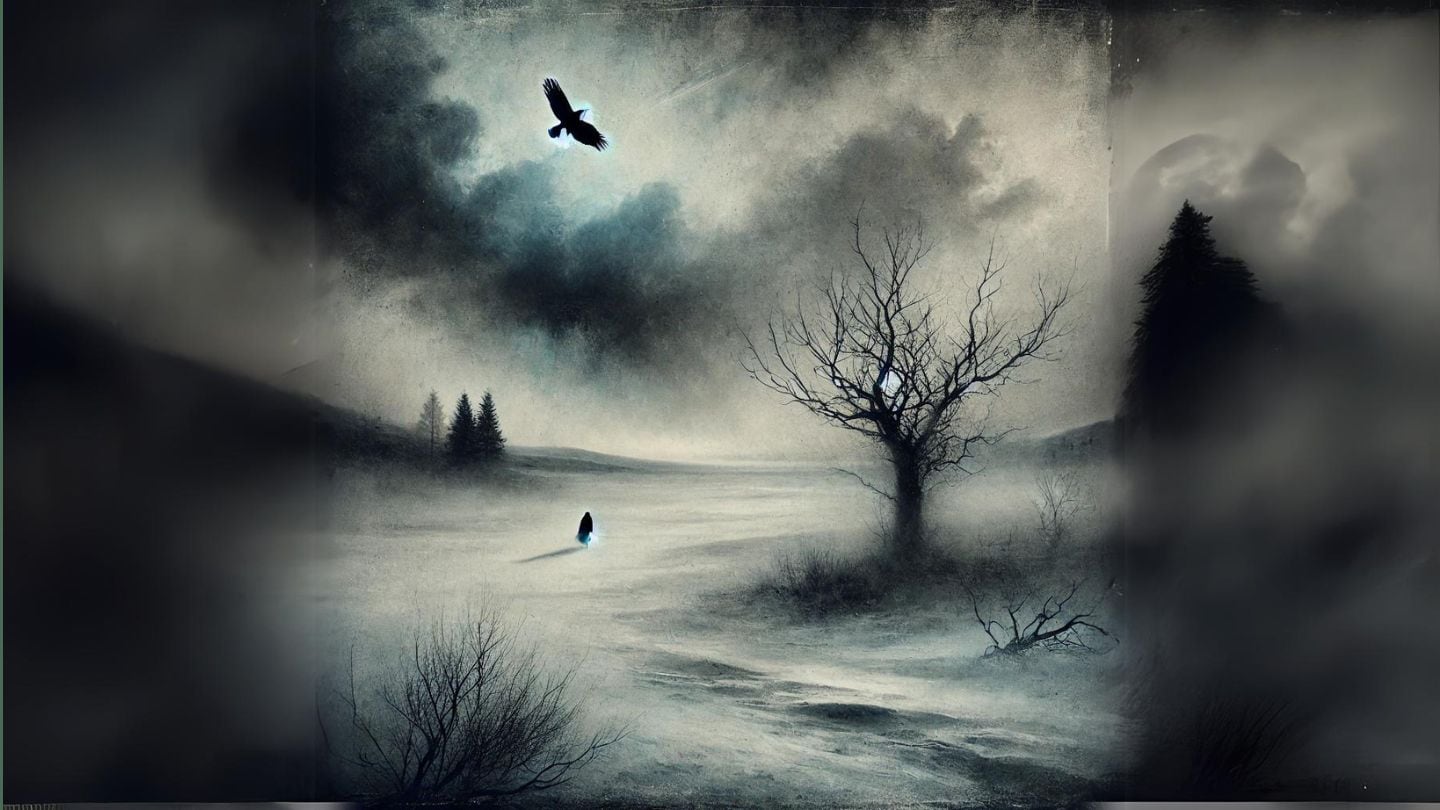
For years, I hadn’t listened to «The Crow» («Die Krähe») from Schubert’s Winterreise. Last night, amid the storm, I returned to this lied through an unfamiliar recording: the English tenor Ian Bostridge accompanied by pianist and composer Thomas Adès. I felt something close to terror and understood—perhaps for the first time—the profound desolation that solitude brings when all former bonds are severed: friends, family, the love that consoles us.
My touchstone has always been the Hans Hotter version. The great Wagnerian bass-baritone interprets this cycle like a distant yet merciful god contemplating his wandering son’s suffering. Hotter, in his way, never relinquishes hope for redemption. Bostridge, by contrast, underscores the horror of fallen nature, drawing out a slow, agonizing rhythm that presages madness. His voice isn’t beautiful, but then, who would expect a winter journey to be? What matters here is something else entirely, something overwhelming that defies definition. As I drifted off to sleep, lightning still flickered over the sea. The rain and wind worked their hypnotic spell, like a lullaby. We remain children even as we venture into the realm of maturity.
Upon waking the next morning, I recalled an etymology I had learned from Erik Varden: the word person, in Greek, forms from a double particle suggesting the meeting of two gazes. We become persons when we look and are looked upon, when we recognize and are recognized. If one sees only oneself—as in the myth of Narcissus—then something profound is lost. In a way, our very humanity remains incomplete.
In choosing an expressionist interpretation of Schubert’s lied—so aptly supported by Wilhelm Müller’s verses in Winterreise—Bostridge reveals the path humanity has followed these past two centuries. The Enlightenment has culminated in a particularly tragic experience of solitude. The collapse of myths that once sustained a common creed and of institutions that mediated among people has yielded to an atomization of the individual, where we scarcely recognize others as fellow beings. We oscillate between sentimentality, indifference, and hostility, either in turns or simultaneously. Beneath our flesh lurks Schubert’s crow, devouring us slowly without mercy.
The question of art is, above all, one that probes each of us and opens the future to new paths. Schubert’s romanticism, with its burden of anguish, translates into our era with all the hallmarks of the twentieth century: mass destruction, totalitarianism, the indiscriminate use of propaganda, rock music… No society can emerge unscathed from these experiences, nor can any recreation we attempt of past or present. Like the wanderer who sings in Winterreise, we journey in search of an authentic home. Civilization thus springs from a simple gesture repeated through time: welcoming hands and recognizing eyes that preserve us from dissolution.


0 comentarios